


Lady Edwina Grosvenor: You get a lot of negativity if you’re rich
Lady Edwina Grosvenor: You get a lot of negativity if you’re rich

Peter StanfordSun, November 22, 2026 at 6:00 AM UTC
0
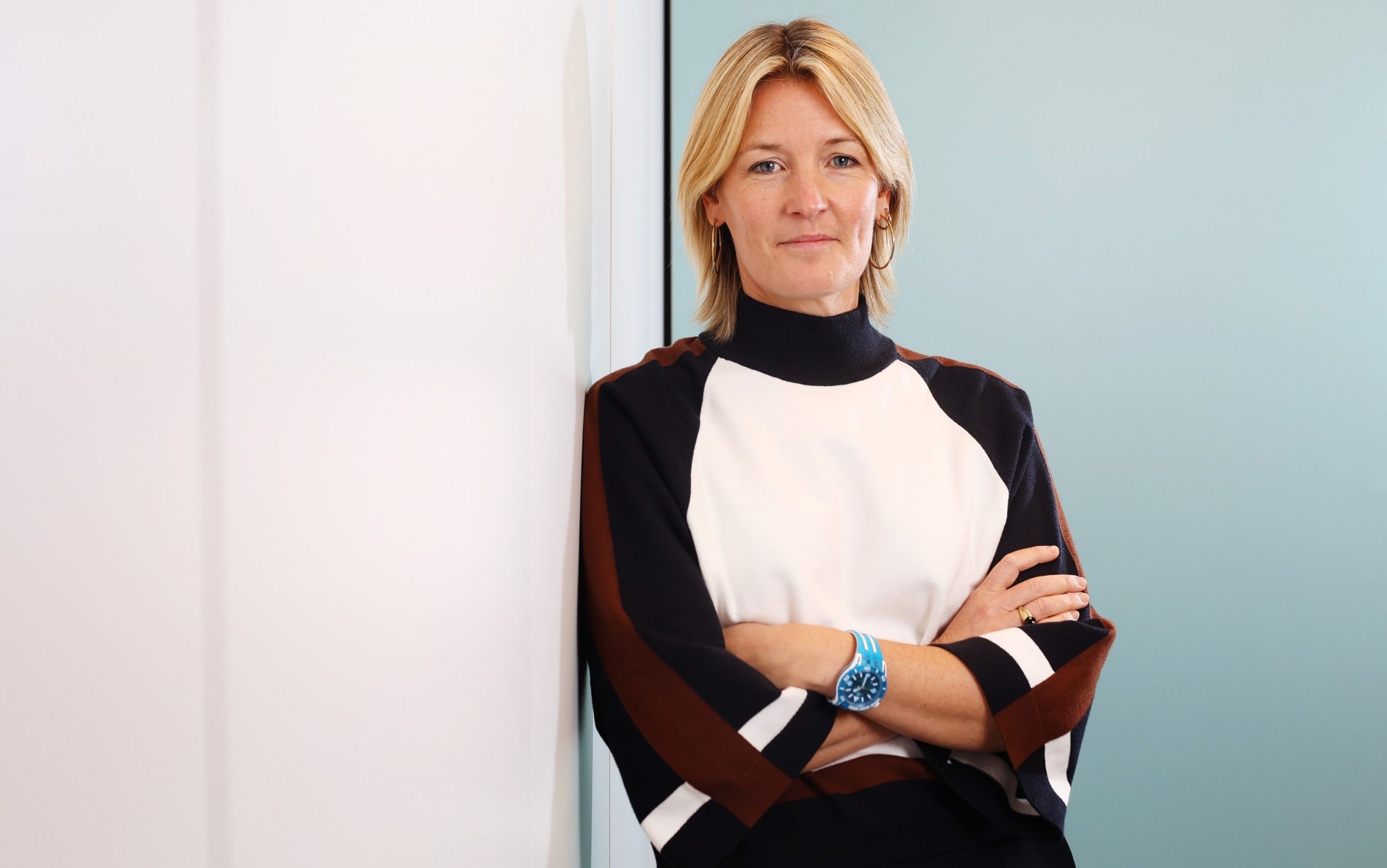
Lady Edwina Grosvenor photographed for the Telegraph at the family headquarters in Mayfair, London - Clara Molden
Youth is a time when many of us nurture plans to change the world for the better. Edwina Grosvenor’s pipe-dream came to her when she was 18, as a result of visiting a women’s jail. And – unusually – it remains the focus of her working life 27 years on. She is on a mission to prevent women from going to prison.
“I wanted,” she recalls, “to redesign one part of the Great British justice system. I know that sounds grand and maybe a bit mad.”
Next week, this highly respected criminologist and prison reformer will reveal her latest plans through One Small Thing, the charity she set up in 2014. She will be funding two further centres, in addition to the one she opened three years ago in Southampton, which take in women from the courts who would otherwise end up in prison for low-level crimes.
Over the past three years her Hope Street facility has seen a substantial reduction in reoffending in its residents. The unique facility features eight flats, 24 beds, a crèche, and a probation office. Women live there for 12-16 weeks before moving out to charity-managed housing across Hampshire for up to six months. Mothers can bring their children with them to Hope Street – which is not permitted in prison – and the centre has also made an impact in cutting the number of children who end up going into care.
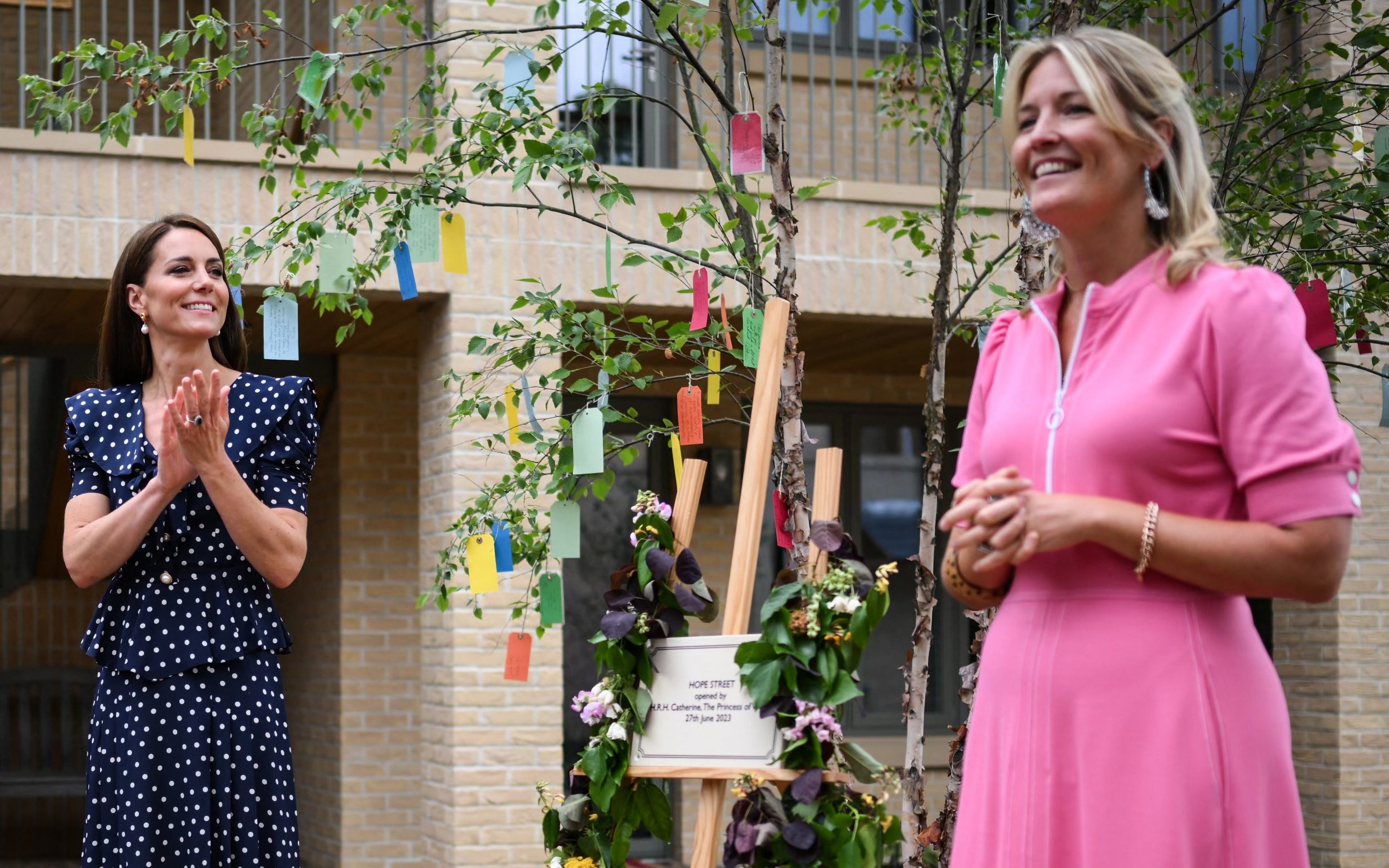
The Princess of Wales (left) officially opened Hope Street in Southampton in 2023 alongside Edwina Grosvenor - Daniel Leal / AFP via Getty Images
Grosvenor, 45, is the first to acknowledge that, when it comes to pipe-dreams, she is in the very privileged position of having the wherewithal to make them real. The daughter of the sixth Duke of Westminster, she is the older sister of Hugh Grosvenor, the current head of Britain’s best-known land-owning dynasty, which is collectively worth an estimated £10bn, with 300 acres of prime central London as part of their portfolio.
‘Life without purpose is the devil’s playground’
We meet in the discreetly smart Grosvenor Estate office in Mayfair. At just short of 6ft tall, Edwina Grosvenor was always going to stand out in a crowd, despite her un-grand manner, correct but not crystal pronunciation and her dress-down wardrobe. Those who have worked with her over the years speak of how, as she has matured, her youthful shyness has been replaced by a new-found confidence. Those who insist on calling her Lady Edwina are quickly disarmed.
She could, however, be living a life of luxury and leisure in any one of the family’s homes. “But a life without purpose and too much time is the devil’s playground. I do remember thinking that I didn’t want my title [as the daughter of a duke she has the courtesy title of Lady Edwina], my wealth or my background to define me. You do get quite a lot of negative attention if you are a wealthy person,” she admits, “but it doesn’t really bother me.”
So far she has done a very good job of escaping the things that should define her. Past generations of her family were betrothed to fellow aristocrats, but for the past 16 years she has been married to television historian Dan Snow – often referred to as “the history hunk”. And in her career, she has become one of Britain’s most sought-after experts on crime and punishment.
That seminal prison visit aged 18 was on a gap year in Nepal. Through the stepmother of a friend who was a missionary working in Kathmandu, she was able to get inside the city’s women’s prison. The shock of what she saw and heard, she says, has stayed with her ever since.
Once back home, she chose a degree in criminology at unfashionable Northumbria University. Graduating in 2004, she then spent a year as a support worker in HMP Styal, a women’s prison in Cheshire (where she wrote her dissertation on the mother-and-baby unit).
It is close to her family seat, Eaton Hall, whose 10,000 acres have been home to the Grosvenors since the 15th-century.
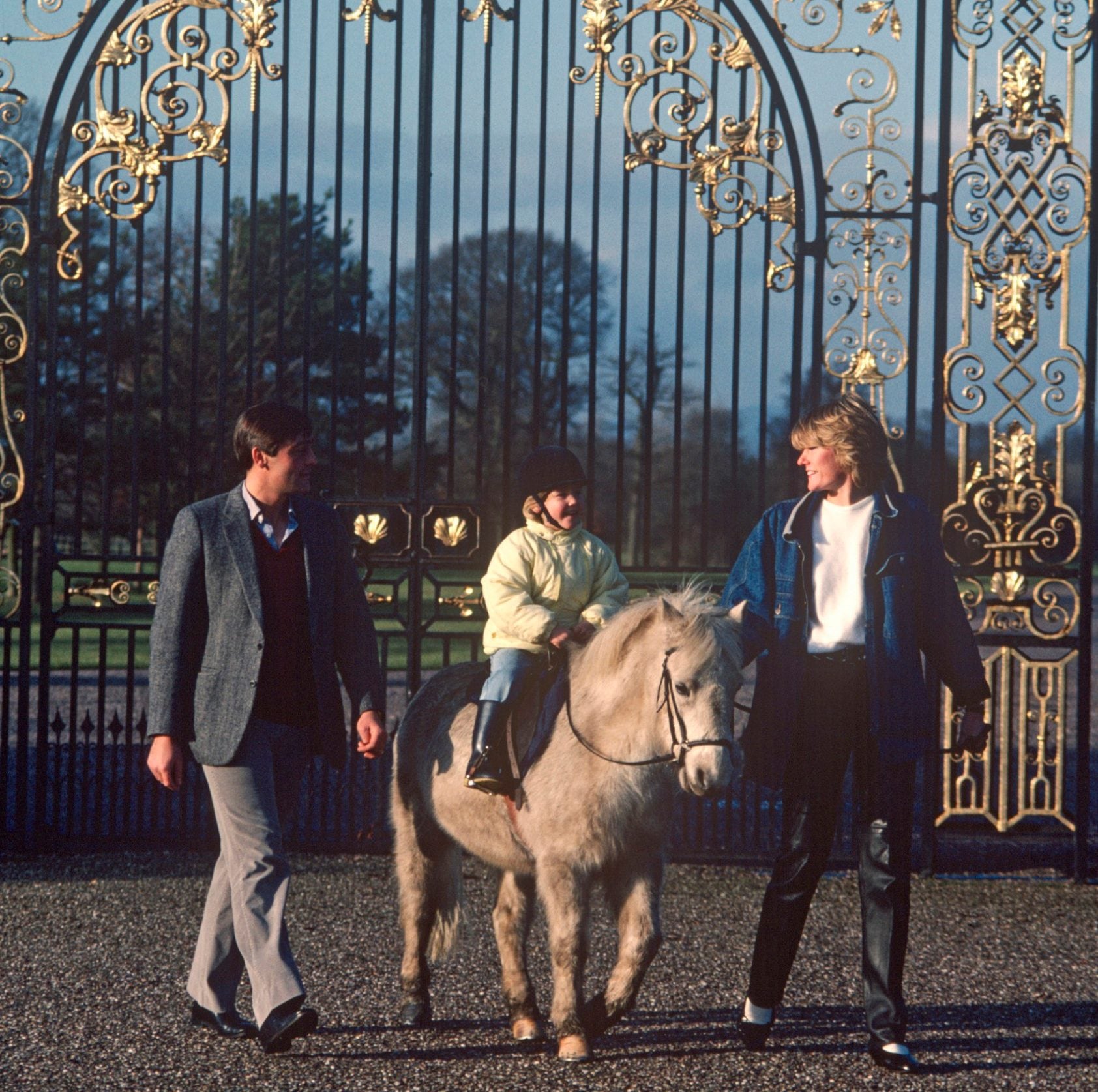
With her parents, the Duke and Duchess of Westminster, as a child in 1986 - Patrick Ward/Popperfoto
“I’ve always wanted to be out of my comfort zone,” she says. “When I was young, someone told me your comfort zone is a lovely place but nothing grows there. I’ve had that pinging round in my head ever since.”
And so, after Styal, she did a stint at HMP Garth, a male high-security prison in Lancashire, running a restorative justice programme. Though her primary focus has been on female offenders, who make up just 4 per cent of prisoners, she is keen to emphasise that she hasn’t ignored the other 96 per cent. Her work with the male prisoners at HMP Garth also coincided with her meeting Dan Snow. They were seated next to each other at a wedding by match-making friends.
One of the downsides of great wealth, she says, especially when dating, was that it made her (“and my parents”) wary of the motives of those who wanted to befriend her, including potential boyfriends. “You have those vulnerable moments, when you think, ‘why do people hang out with me?’”
Soon after their first meeting Dan called to ask her on a date. “It turned out he was filming on Hadrian’s Wall, while I was at Garth, so we agreed to meet up at the prison. When he turned up we were wearing matching blue rain jackets” – she is good at sending herself up – “so more embarrassing rather than romantic, but off we went and the rest is history.”
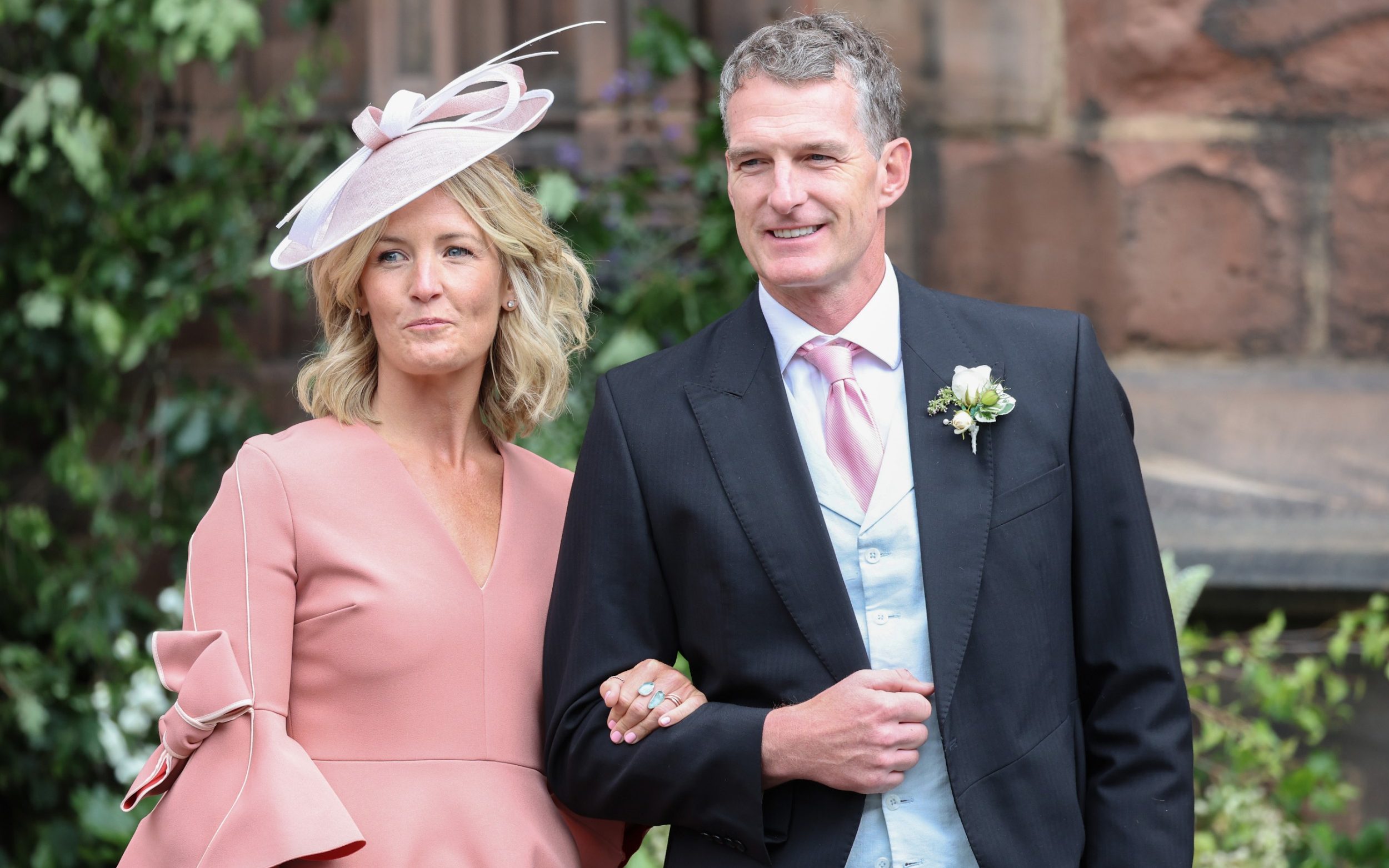
With her husband, television historian Dan Snow, whom she married in 2010 - Chris Jackson
There followed three years from 2007 to 2010 when she was assistant to James Jones, Bishop to Her Majesty’s Prisons (who also, as Bishop of Liverpool, married the couple in a small ceremony at his official residence, Bishop’s Lodge).
The rapid arrival of their three children – Zia, Wolf and Orla, 15, 12 and 10 – slowed her down a bit as a criminologist, but her expertise was already sufficiently recognised for then prime minister David Cameron to appoint her in 2013 to the Advisory Board on Female Offenders.
She also worked with other like-minded individuals of means, including the businessman and future Prisons’ Minister, James Timpson, and as a founder and investor in the charity The Clink, founded in 2009, which set up restaurants in four prisons to enable prisoners to train to work in the hospitality industry on release.
A succession of similar roles followed, up to and including being named in 2025 to the Women’s Justice Board by Prisons’ Minister David Cameron. Yet such committees, she is the first to acknowledge, with the blue-sky thinking they encompass, seldom lead to action from hard-pressed ministers.
‘My father’s death made me reassess everything’
It was, she says, the death of her father, at 64, from a heart attack in the summer of 2016 that ultimately made her decide to strike out on her own and turn One Small Thing into the vehicle which, after planning and winning the trust of Whitehall and the courts, opened the first Hope Street more than three years ago.
“[His death] was one of those moments in life that really makes you sit back and reassess everything. Am I going to carry on going around like a one-legged duck attending round-table events on prison reform and speaking to ministers who change every five minutes? Or, I could bl---y well get on with it?”
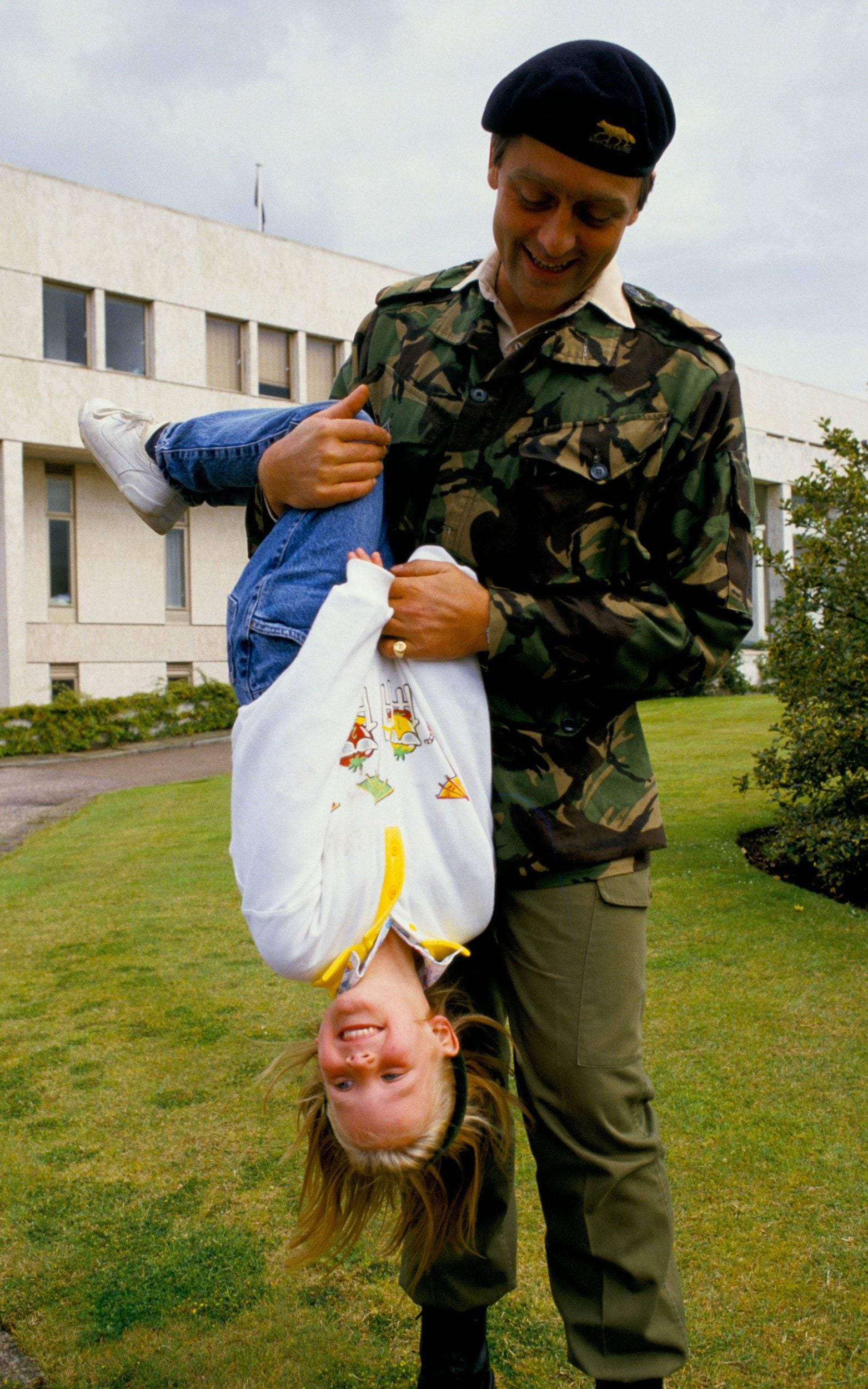
Pictured with her father at their home Eaton Hall in 1991 - Homer Sykes / Alamy Stock Photo
So far, just short of 100 women and nine children have left Hope Street (with 31 others indirectly supported). Grosvenor was keenly aware that since she was footing most of the bill it could be open to the familiar charge of being too well-appointed. “We wanted to prove that you could build well but not spend over what you should, so we bench-marked the square footage on a good primary school.”
There are 53 external organisations that use the space, too. There are no locks on the doors, though all conditions set by the courts and probation for those living there are followed, including regular drug testing.
“The women who come to us from the courts have typically committed offences [theft, shop-lifting, drugs] that did not cross the custody threshold. The magistrate wanted to give them a community sentence but, if they were homeless or had domestic violence in their background, there had to be a safe place to send them and there were none available. So, they went to prison.”
Overcrowding crisis in prisons
Such stories, Grosvenor points out, touch directly on the current overcrowding crisis in prisons which has caused the controversial early-release programme. “When we talk about the capacity crisis in our prisons, imagine if that chunk of women were not in prison, filling up the places.”
It is her common-sense approach that has made Edwina Grosvenor such a powerful advocate for prison reform. Next week, she will unveil a commissioned independent analysis of Hope Street’s record from the crime and justice consultancy Crest Advisory. The report shows the positive economic benefit to taxpayers and the country at large if such alternatives to custody were available not on the whim of philanthropists, but as part of the state system.
Official figures show that we are currently spending an average of £57,000 per person per year on those in jail, but 40 and 50 per cent of them end up back inside within a year. For some women offenders, that figure climbs as high at 78 per cent.
Advertisement
The Crest Advisory report offers a cost-benefit analysis of how the almost £10m invested in Hope Street compares with the money the place saves the Exchequer by reducing reoffending – the major component – but also by shrinking sky-high prison custody costs, cutting self-harm incidents among those imprisoned, and stopping the children of the women there being taken into care, with all the negative outcomes that data reports care-leavers have.
“Public funds are limited,” she argues, “so I believe we need to spend smarter. It is very important to me to have nailed down our return-on-investment in black and white. For every £1 we spent at Hope Street in our first couple of years, the return was £2.27, while in the last 12 months it was £3.40.”
She describes how the many times over the years successive ministers have told her that the country just can’t afford to run better prisons. Now, she is about to show the naysayers that treating prisoners better actually reduces the burden on the public purse.
“It is good bang-for-buck according to independent scrutiny and now, when I am speaking to ministers, I have that in writing. This isn’t opinion. It is fact.”
Edwina Grosvenor grew up at the family seat in Cheshire, the second of four children, between her older sister Tamara (who in 2004 married Prince William’s close friend Edward Van Cutsem) and younger sister Viola, an ambassador for the bullying charity, Kidscape. But it was their brother, Hugh, the third child, who inherited the title and the Grosvenor Estate in 2016 on the death of their father under male primogeniture rules. “I was the second girl anyway, so it made no difference to me.”
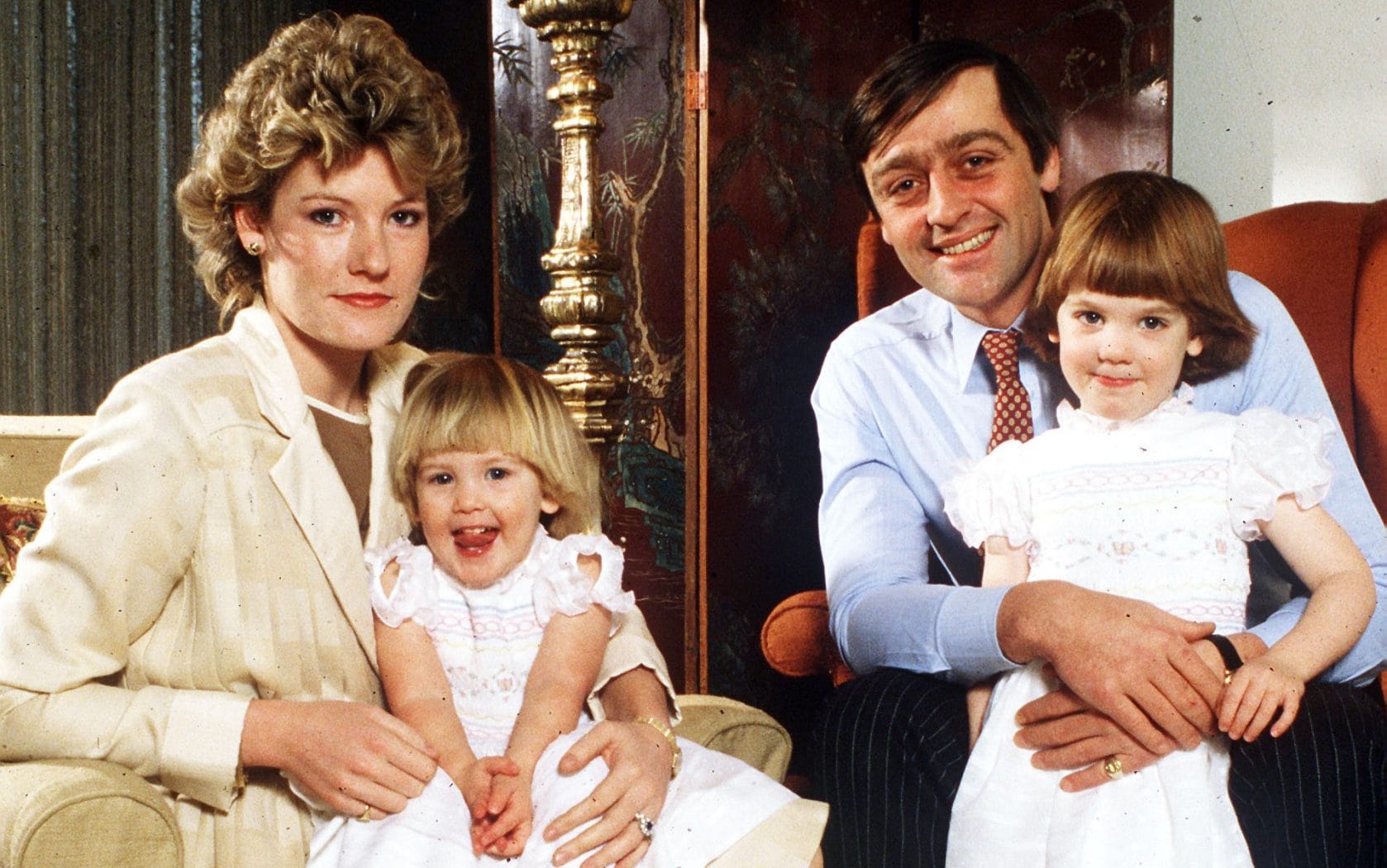
With her parents and older sister Tamara (right) - Alpha Press
The philanthropy gene, though, was, part of all their upbringings, along with a willingness to discard aristocratic convention. “My father went to boarding school aged six and didn’t like it, didn’t get on with it, and had such a miserable time.
He therefore refused to send her or her siblings to boarding school, instead preferring Mostyn House, a modest, private, co-educational day-school on the Wirral. But even there it wasn’t an entirely classless environment.
“Why I had all this stuff brought me a lot of negative attention. People say things. Some decide they are not going to like you. Teachers often said things that weren’t appropriate, but you learn how to deal with it.”
A key turning point
Another of what she regards as the key moments in her life came when she was 12. Her parents – her mother Natalia, now 67, was a descendant of the Russian royal family – took her to visit a drug rehabilitation clinic on Hope Street, which runs between Liverpool’s two cathedrals. It provides the name for her project.
“They wanted to educate us about drugs by taking us to the frontline. They knew that if they had just told us not to use drugs, we would have ignored them so they took us to a different world to see other people’s struggles.”
It sounds very like the visits of her godmother, Princess Diana, with her sons William and Harry to homeless shelters. “Maybe,” she suggests, “our parents were all in cahoots about that.”
And it was a lesson learnt in more than one way. She now takes her own children to Hope Street in Southampton. “It’s not sitting them down and giving them a lecture. I just let them experience it.”
She is not the only funder of Hope Street. Different philanthropic trusts have also contributed, and she is keen now to see others, up to and including the Government, getting involved in developing the model with her.
“If they can make contracts [to run prisons] with Serco and G4S, why not me? We are relatively small, but we pack a big punch, and the profit all goes back into the organisation.
It was probation and police officers, working with vulnerable women coming out of prison in Durham who approached her, after hearing of the success of the Southampton centre, to ask her to build a second Hope Street in their area. If all goes to plan it will open next year, with a third planned in Wales at an earlier stage of development.
She met women who were being released from prison in Durham with nowhere to go, no probation hostel, not even the last resort of (widely in use at the moment) them being given a tent to sleep in.
“They told me that rough-sleeping in a graveyard was the safest option for them.” It sounds like the opposite of safe and sits oddly with Andy Burnham’s pledge on the steps of 10 Downing Street to end rough-sleeping.
“When you think about what we said,” Grosvenor says, “we know a quarter of everyone in prison is being released homeless. Prison needs to be part of the solution.”
So, she is keeping an open mind on our new Prime Minister. “Of course, at the moment the early-release scheme has been putting prisons in the headlines, but he did mention back in September that there were far too many women in prison who should not be there.”
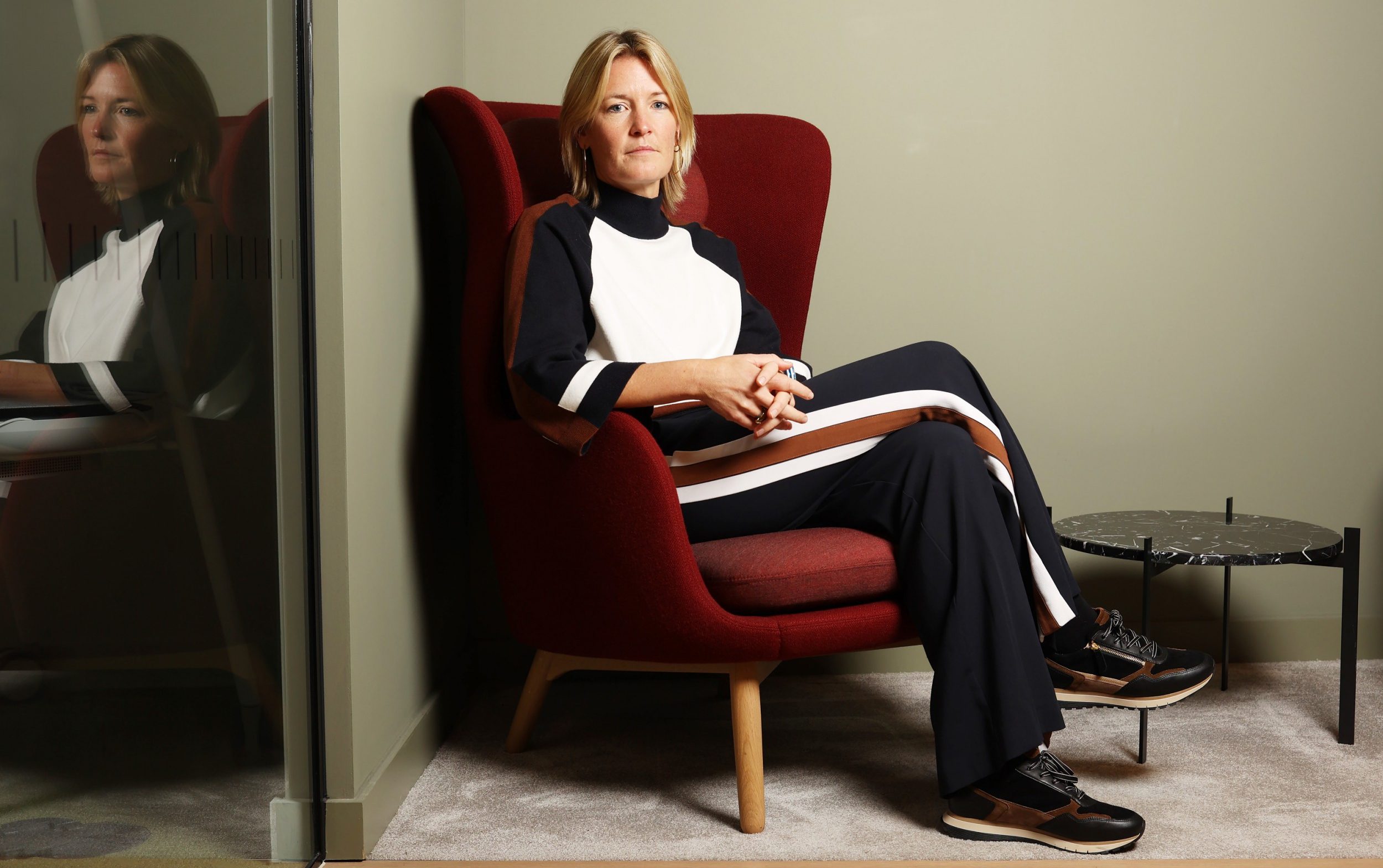
‘I’ve always wanted to be out of my comfort zone’: Edwina Grosvenor pictured for The Telegraph in 2026 - Clara Molden‘People call me a do-gooder’
Unlike many charity pioneers – and wealthy heiresses – Grovesnor also has a keen eye and knowledge for how politics and Westminster actually works, fine-tuned during her time there assisting Bishop James Jones who sat in the House of Lords.
“If we are going to get change in the criminal justice system, it has to sit above the Prisons’ Minister and the Secretary of State for Justice. It has to be a priority for the Prime Minister.”
Next week’s launch is just the next step on the unusual road she has chosen. “I reckon I have, if I am lucky, another 30 years.”
Yet, with negative headlines swirling around the early release scheme, not to mention the current focus on the fate of Russell Brand and his “too cushy” life behind bars, does she worry the public mood might be against her?
“There is always a crisis happening in our prisons. It is much worse today than it was when I walked in aged 18. People say we have slept-walked into this crisis. I say we have marched towards it with our eyes wide open”.
Hope Street, then, is the summation of her dream of changing the Great British justice system, a challenge to a government keen on planning not just for next year but also the next decade, to make our prison system more effective in stopping reoffending and doing it for a fraction of public money it is currently swallowing up. “It is,” she says, “all very do-able”.
“People may call me a ‘do-gooder’,” she says, “but like everybody else I am interested in public protection. I’m interested in my children being safe. I’m interested in being safe myself. And to do that we need a justice system that works.”
For more information visit One Small Thing’s website
Source: “AOL Entertainment”
