


Profits of European oil giants doubled this year amid Middle East war, report finds
Profits of European oil giants doubled this year amid Middle East war, report finds

Stuti Mishra Sat, October 31, 2026 at 5:25 AM UTC
0
Six of Europe's biggest oil companies have made $89bn (£67bn) in profits in the first nine months of 2026, more than double of the amount during the same period last year, as the war with Iran pushed up energy prices.
BP, Eni, Equinor, Repsol, Shell and TotalEnergies made $38bn (£28bn) between July and September alone, a report by campaign group Global Witness found from the companies' quarterly results, released this week.
The nine-month total is 102 per cent higher than for the same period last year.
The war began on 28 February with US and Israeli strikes on Iran.
Shipping through the Strait of Hormuz, a route for about a fifth of the world's oil and gas, has been disrupted ever since, which has raised the price of crude oil, gas and fuels, and the profits that refiners make on them. Refining profits per barrel have nearly quadrupled at Shell and TotalEnergies compared with a year ago.
Shell's adjusted earnings for the third quarter nearly doubled to $10.8bn (£8.1bn), its highest since 2022, and TotalEnergies' more than doubled to $9.1bn (£6.8bn).
BP's underlying profit nearly quadrupled to $8.5bn (£6.4bn), beating analysts' forecasts, although its chief executive, Meg O'Neill, said BP expects some easing in the fourth quarter.
The companies have used the windfall mainly to pay down debt and return cash to shareholders, and have not raised spending on new production. Shell's net debt fell to $39.7bn (£29.8bn) in the third quarter from $52.6bn (£39.5bn) in the first, and it cut its 2026 capital spending guidance by $1bn (£0.75bn) to between $23bn and $25bn (£17bn to £19bn). TotalEnergies' debt as a share of its equity fell below 10 per cent, and BP's net debt fell to $13.87bn (£10.4bn).
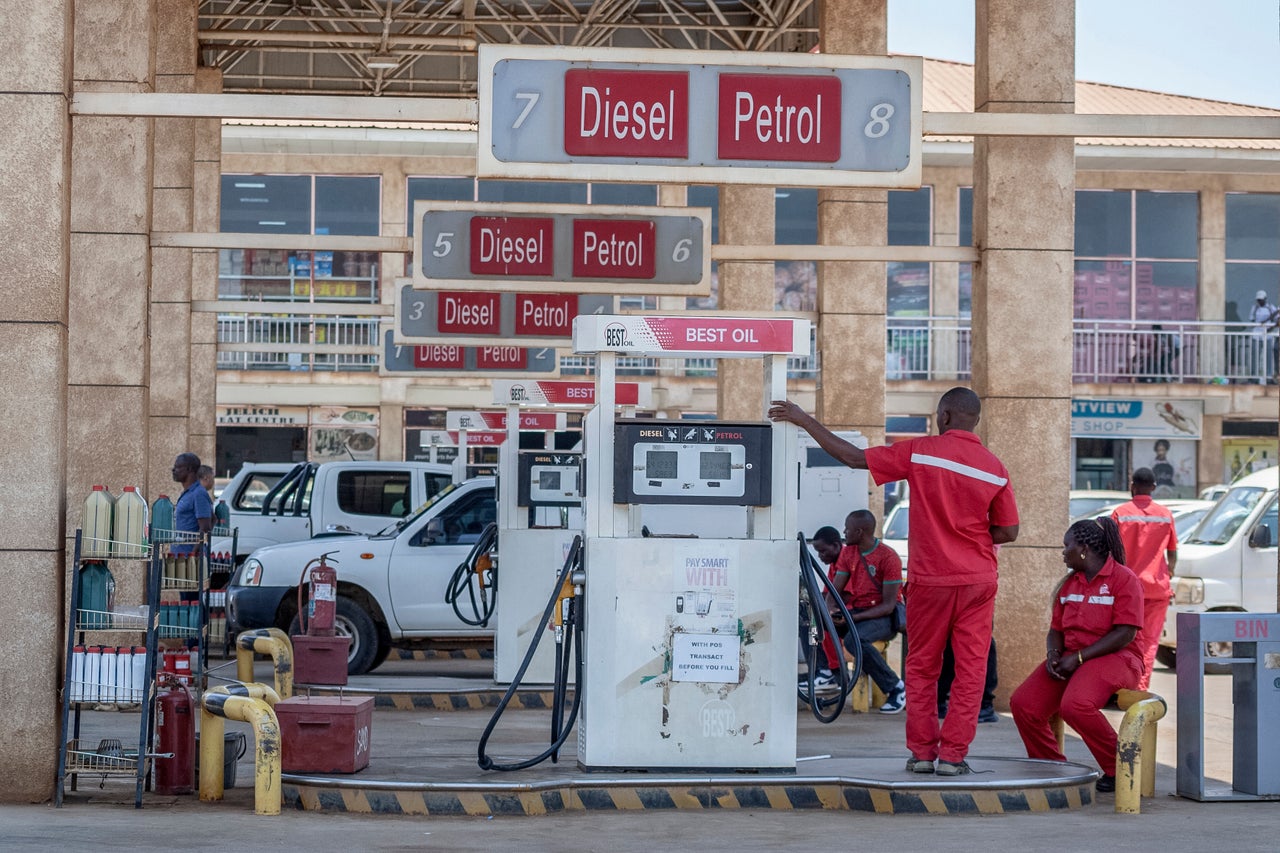
Fuel attendants take a break due to the fuel shortage at Best Oil filling station in Area 49 Lilongwe, October 22, 2026 (AFP/Getty)
Brent crude, the global benchmark, traded at $60 to $70 a barrel before the war, rose above $100 in March, and reached about $117 (£88) on Friday, its highest since late April, after a tanker was attacked in the Strait of Hormuz.
There is no end to the war in sight. Iran's ambassador to Pakistan has said Tehran will reopen the strait if Washington ends its blockade of Iranian ports, which the US has refused to do, and US vice president JD Vance has written to a senior Iranian official, to which Iran had not replied by Friday, Iranian media reported.
Advertisement
The analysis from Global Witness found in May that the same six companies made $22bn (£16.5bn) in the first three months of the year, their highest quarterly profits since 2022.
Oxfam projected in July that six of the world's biggest fossil fuel companies would nearly double their profits in the second quarter, and estimated that an extra tax on 585 oil, gas and coal companies could raise $400bn (£300bn).
Jonathan Noronha-Gant of Global Witness called the profits "obscene".
"It is obscene that polluters are continuing to cash in on the fallout of the war in Iran, making more bumper profits from spiralling oil prices while innocent civilians suffer," he said.
"These massive profits come as ordinary people across Europe are struggling with the rising cost of living, with many struggling to afford to heat their homes as winter arrives. Oil giants can and should pay much more for the damage they are doing to our planet."
The European Union is examining a bloc-wide windfall tax on oil and gas companies, the EU's tax chief, Wopke Hoekstra, told Reuters earlier this month.
Germany, Spain and four other member states have urged it to, and Portugal has already imposed a 33 per cent tax on extraordinary profits earned in 2026 by oil and refining companies.
The EU introduced a similar levy in 2022 after Russia's invasion of Ukraine, and in the UK, North Sea companies pay the Energy Profits Levy, a temporary windfall tax introduced the same year.
"It is good news that the EU is currently considering a tax on companies' windfall profits," Mr Noronha-Gant said.
"But a permanent climate tax on fossil fuel companies is long overdue, this is one of the most effective tools we have to protect households from price shocks, as well as funding cheaper, cleaner renewable energy for all."
The oil and gas industry has rejected an EU-wide windfall tax, saying it would undermine investment, weaken energy security and slow the low-carbon transition.
Source: “AOL Money”
