


Uber Just Fell 13% in a Month. Is It Time to Sell, or Should You Buy the Dip?
Uber Just Fell 13% in a Month. Is It Time to Sell, or Should You Buy the Dip?

David Moadel Mon, September 28, 2026 at 8:02 PM UTC
0
Sundry Photography / iStock Editorial via Getty ImagesQuick Read -
Uber slid 13% over the past month while the QQQ gained 4%, exposing a sector-specific selloff that left rideshare and delivery stocks behind large-cap tech.
Lyft fell 15% and DoorDash tumbled 24% over the same stretch, making Uber the relative winner in a group where every name still lost ground.
Uber's relative outperformance points toward sector rotation rather than company-specific trouble, but a recovery may still require a fresh positive catalyst.
Read More: Avoid these 13 retirement mistakes before they derail your future (sponsor)
A rough month has left Uber Technologies (NYSE:UBER) holders asking whether the pullback signals lasting trouble or a chance to stay patient. Uber stock trades at $68.45 this afternoon, down 13% over the past month. That slide in Uber arrived during a stretch when large-cap technology names moved higher, which makes the gap harder to ignore.
Both of Uber's closest peers fared worse over the same stretch. Shares of rideshare rival Lyft (NASDAQ:LYFT) took a steeper hit, sitting at $14.81 and down 15% over the past month. Meanwhile, the sharpest slide hit DoorDash (NASDAQ:DASH) shares, now at $180.31 and down 24% over the past month.
Those declines across Uber, Lyft and DoorDash look even sharper next to two fund benchmarks. The Invesco QQQ Trust (NASDAQ:QQQ) is up 4% over the past month. At the same time, the iShares Transportation Average ETF (CBOE:IYT) is down 9% over the past month. That fund carries Uber as one of its largest disclosed positions.
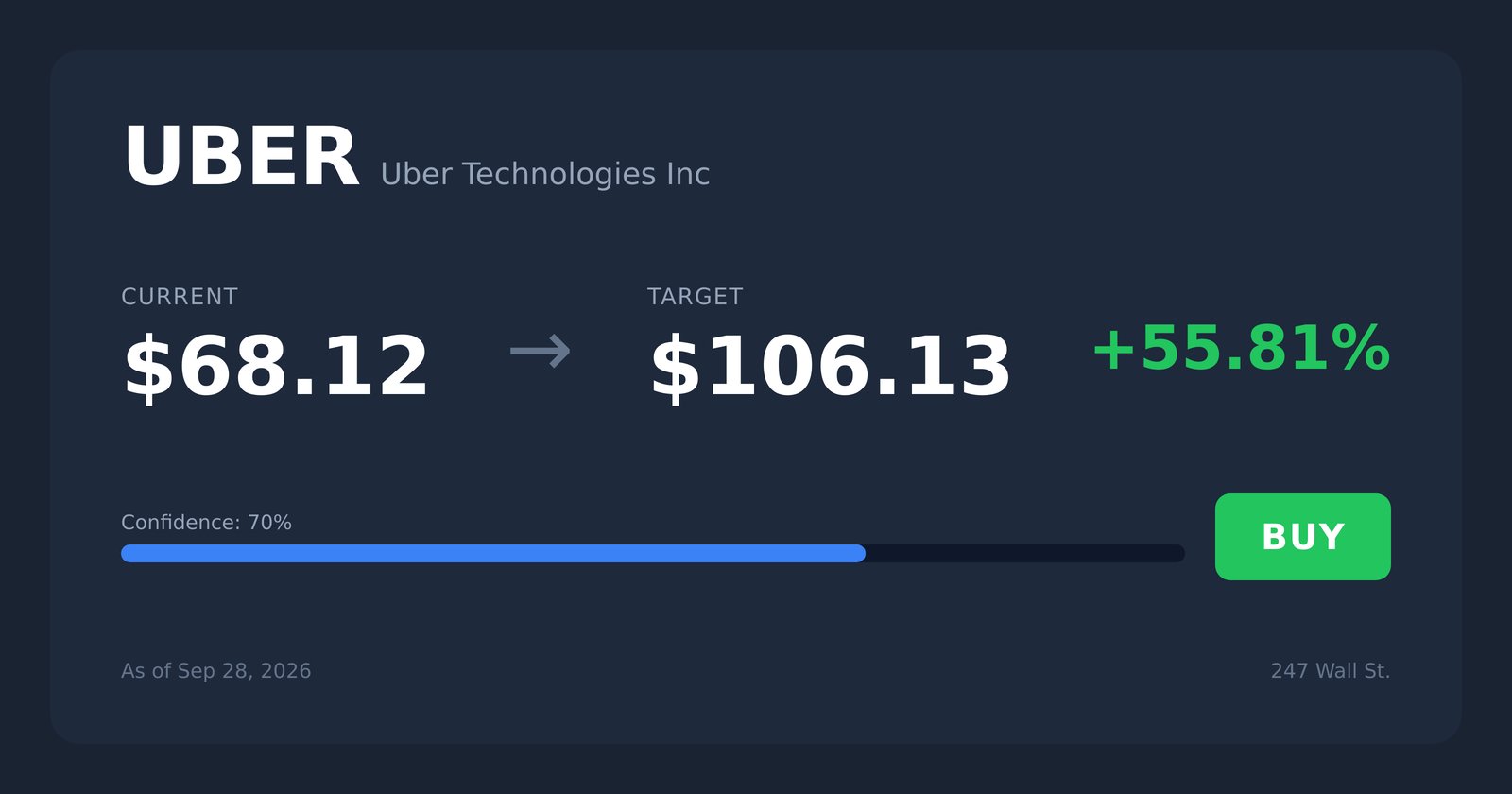
UBER Price Target — 24/7 Wall St.Uber Held Up Best in a Punishing Month
Uber stock fell less than both Lyft stock and DoorDash stock over the past month, which makes Uber the most resilient name in the group, and that resilience came during a stretch that hit every rideshare and delivery platform, so the company's relative edge still left Uber shareholders nursing a loss. Relative strength like that can hint at a market that still grants Uber more credit than its peers.
Learn 13 Major Retirement Mistakes and Ways To Avoid Them
One investment mistake could create big risks for your retirement. Many investors make the same critical errors: being too conservative, making big bets on “sure things,” or paying excessive fees. Any of those blunders can endanger your hard-earned savings.
Now you can learn the mistakes even experienced investors make (and ways you can sidestep them before it’s too late) with this new guide: 13 Retirement Mistakes and How to Avoid Them from Fisher Investments. Access your complimentary copy here(sponsor)
Nevertheless, DoorDash stock absorbed the biggest damage of the three, with Lyft stock landing between DoorDash and Uber. A spread of that shape fits a group-wide move, where every name heads in the same direction by a different degree. For Uber stock, the narrower drop offers some reassurance, although anyone holding the company through the month still sits on a loss.
Uber Is Reshaping Itself for an Autonomous Future
Uber stock’s decline over the past month has arrived alongside a significant internal reset. In early September, the company said it would reduce its workforce by roughly 10%, or about 3,300 jobs, as it removes management layers, simplifies team structures, and concentrates investment on its largest growth opportunities. CEO Dara Khosrowshahi framed the restructuring as a way to operate more efficiently while investing in drivers, merchants, service expansion, and Uber’s long-term autonomous-vehicle ambitions. For investors, layoffs can be a mixed signal: They may support future margins and sharpen operating discipline, but they also underline the competitive and technological pressures facing the ride-hailing giant.
The autonomous-vehicle opportunity has become a particularly important part of Uber’s story. During September, Uber began offering robotaxi rides in London through a partnership with Wayve, extending its effort to position its global network as a distribution platform for autonomous mobility rather than merely a marketplace dependent on human drivers. The company also expanded its self-driving footprint in Europe through WeRide testing in Spain. These moves could eventually reduce the per-trip cost of transportation and reinforce Uber’s network advantages, but they also bring execution risk, regulatory uncertainty, and the possibility that autonomous-vehicle partners capture a substantial portion of the economics.
Uber has also continued looking beyond its legacy ride-hailing business. Recent coverage has focused on a $14.8 billion tender offer for Delivery Hero, which would potentially expand Uber’s exposure to food delivery, grocery, and local commerce outside the United States. A deal of that size could give Uber greater scale in markets where delivery remains highly competitive, but investors will also have to weigh the integration challenge, the capital commitment, and whether the acquired operations can produce durable profitability.
Advertisement
At the same time, Uber used its September “Only on Uber” event to announce a broad set of driver and courier initiatives, including AI-powered trip and earnings tools, more pay protections, new safety features, and additional ways to earn through shopping, returns, and digital tasks. These product updates may help Uber retain the drivers and couriers who keep its marketplace functioning, particularly as the company seeks to maintain service quality while cutting corporate costs. The near-term stock weakness may therefore reflect uncertainty about restructuring and dealmaking, while the longer-term bull case still rests on Uber’s ability to turn its scale, delivery network, and autonomous partnerships into higher-margin growth.
A Group Selloff While Large-Cap Tech Climbed
The gain in the Invesco QQQ Trust shows that buyers stayed active in large-cap technology through the same month that Uber, Lyft and DoorDash sank. That split places the pressure squarely on the rideshare and delivery group, since the benchmark for big technology names moved in the opposite direction. Sector-wide repricing of that sort often reflects a change in what investors will pay for a business model such as Uber's.
A second layer comes from the transportation fund. Alongside Uber, the iShares Transportation Average ETF covers railroads, truckers, parcel carriers and airlines, and that fund fell over the same month. Weakness spread across such a varied mix reads as a signal about freight and mobility demand generally, which drives the story beyond any single company, Uber included.
Weighing the Sell and Hold Cases for Uber
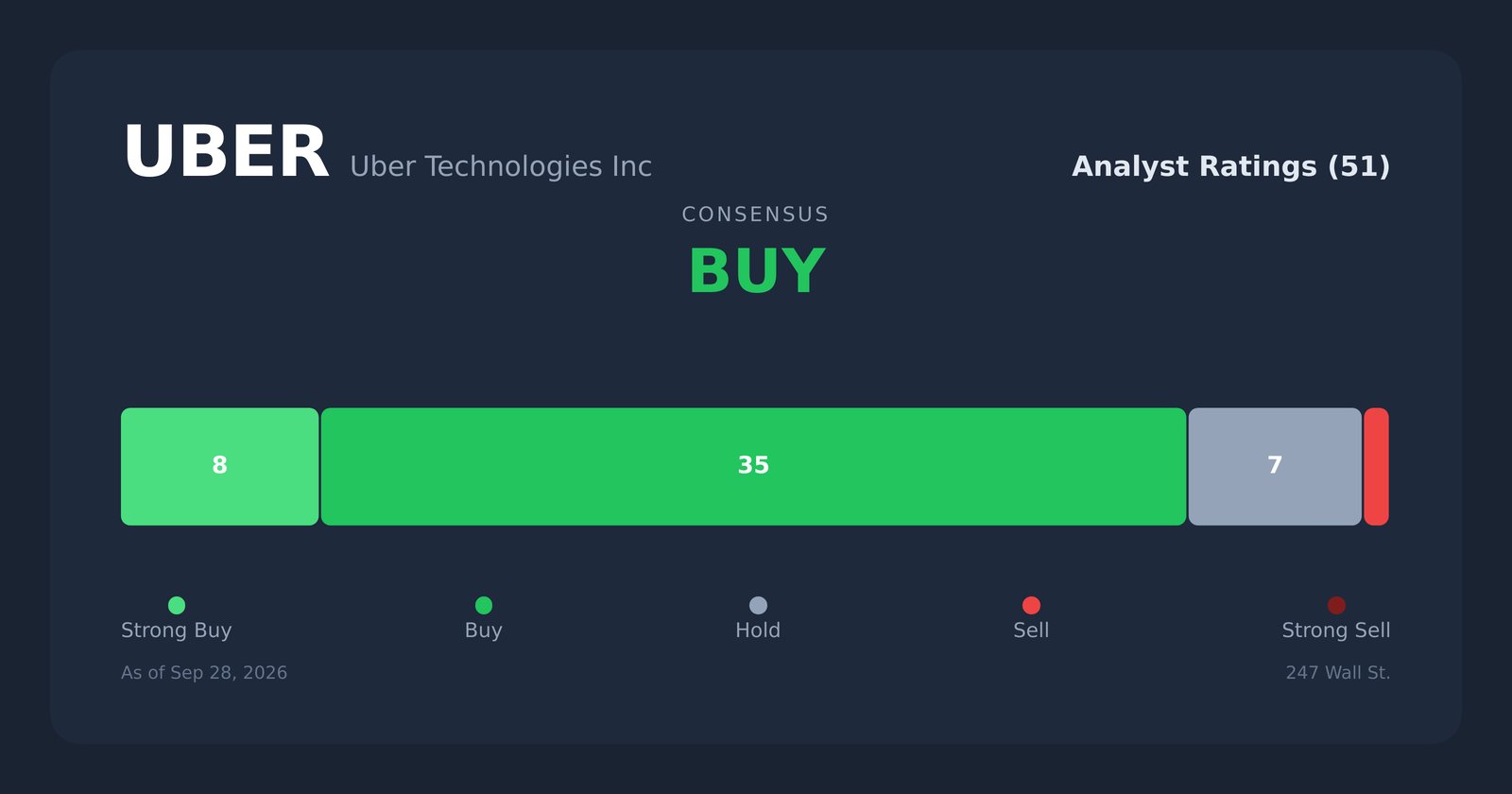
UBER Analyst Ratings — 24/7 Wall St.
Selling Uber has a logic rooted in the month's pattern. When an entire group reprices against a rising large-cap technology market, the move often signals that buyers have changed what they will pay for that kind of business. On that view, Uber might need a fresh positive development to recover, and simply avoiding bad news might prove insufficient.
Outperforming peers may offer Uber limited protection in that scenario, because the leader of a falling group still lost ground. A slump in the transportation fund could reinforce the concern, since freight and mobility weakness might weigh on the company for longer than one disappointing headline would.
Holding Uber shares rests on the same figures read a different way. Uber stock outperformed both peers through the month, and the transport complex fell alongside the company, which points toward a sector rotation. Rotations of that kind tend to reverse more readily than company-specific problems, which could favor patience with Uber shares.
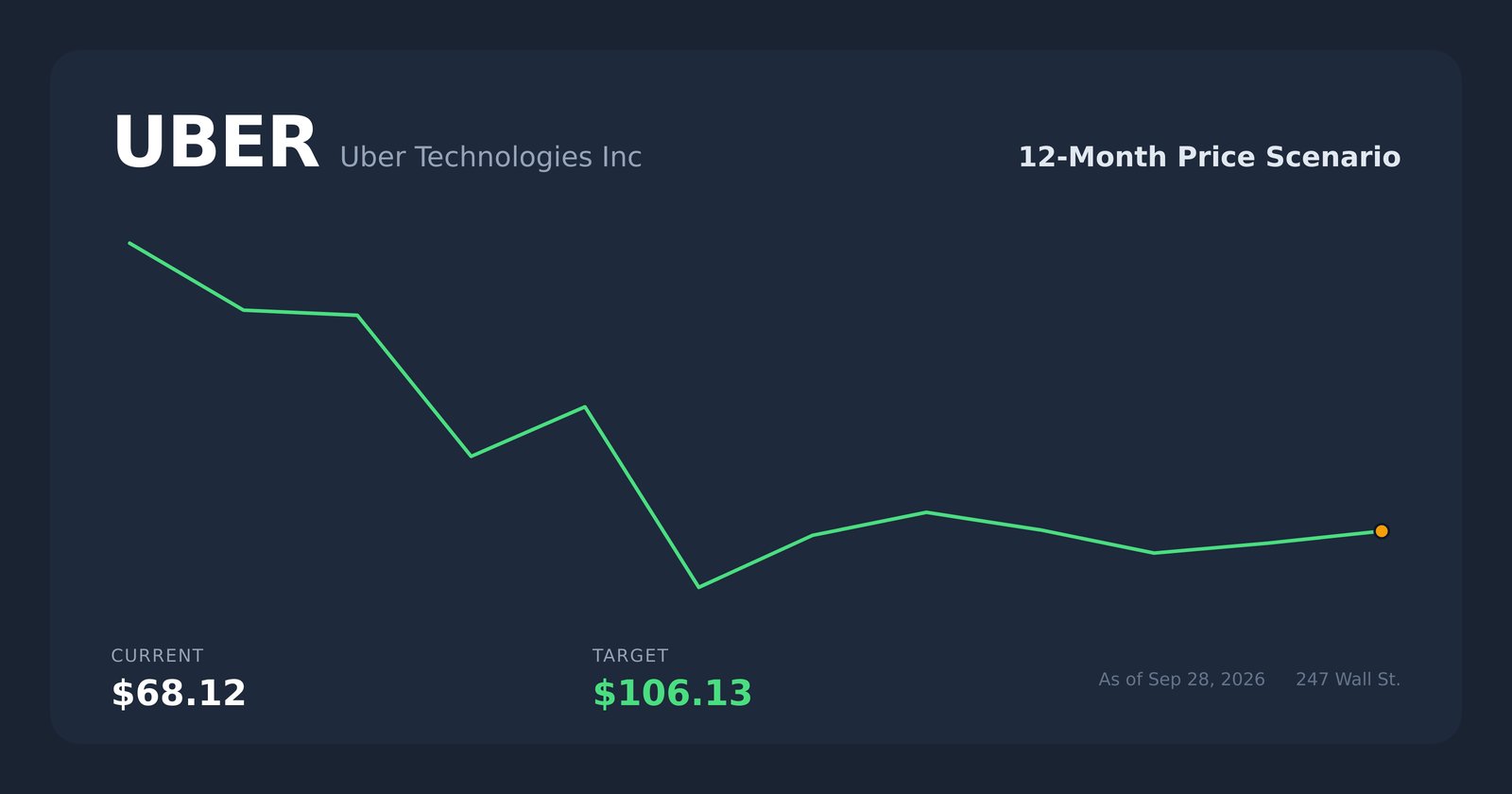
UBER Price Scenario — 24/7 Wall St.What the Month Means for Uber Holders
Uber stock's month leaves the buy-or-sell question open, since the group moved together and the relative leader still lost ground. Both arguments draw on identical data, which leaves the final judgment with each trader weighing Uber against their own time horizon. Sizing their exposure becomes the practical lever for anyone still deciding on a position in Uber shares.
Anyone holding Uber shares through a group-wide repricing will want to size their position fairly enough to absorb further weakness across rideshare, delivery and transport names. Investors adding to their exposure after the slide should likewise size their allocation modestly, since the month's figures fall short of confirming a bottom for Uber stock.
Shareholders may want to watch for Uber shares steadying against Lyft, DoorDash and the transportation fund. A narrowing gap between the group and large-cap technology could offer the first clue about whether Uber stock's slide reflects the business or the crowd.
Help Avoid These 13 Retirement Mistakes Before They Derail Your Future
One investment mistake could create big risks for your retirement. Many investors make the same critical errors: being too conservative, making big bets on “sure things,” or paying excessive fees. Any of those blunders can endanger your hard-earned savings.
Now you can learn the mistakes even experienced investors make (and ways you can sidestep them before it’s too late) with this new guide: 13 Retirement Mistakes and How to Avoid Them from Fisher Investments. (sponsor)
Contact editorial@247wallst.com for any questions or corrections.
Source: “AOL Money”
